metra smart locker system: flexibility
Focusing on the tools that will help you succeed at effectively choosing the best return to work strategy.

Flexible & Adaptable Smart Lockers
Many companies are planning to completely redesign and rebuild the inside of their headquarters building around a new vision for office work, while employees are gone – Betting that the pandemic has changed how we work.
There are many theories and ideas surrounding what the office will look like post Covid-19. Obviously, nobody really knows at this point, but it’s interesting to read the different takes and what trends are starting to emerge as companies wrestle with one of the biggest business challenges of our time.
Amidst all of the uncertainty and various opinions and thoughts, there are a few consistent themes that appear to be more important than ever. The notion of Agility, Speed, Flexibility, or, in other words, the ability to “build, measure, learn” and iterate through that loop as quickly as possible. Whatever terms you want to use to describe the skills and mindset needed to navigate this uncertainty, you will need the right people, processes, and tools to help support and enable your strategies.
For the purposes of this brief blog, we will focus on the tools. We provide a Smart Locker System which we believe can be a critical component in the success of an effective return to work strategy. You can’t read an article about returning to work and it not discussing the notion of digital adoption and touchless technologies. We understand that typically lockers are not thought of in this context — but that perception needs to change.
As demonstrated by the never-ending number of articles written — no one knows the exact path going forward and the best companies will adapt and respond quickly as the variables shift and change. And for that reason, companies need solutions that will adapt and respond to changes just as quickly. The networked, smart locker system can do exactly that. How so?
On-the-fly with a networked, smart locker system the ability to change the locks from assigned, to unassigned and even add delivery (or exchange of goods) capabilities with a click of a button in the software is unmatched and paramount to enable a nimble and flexible return to the workplace strategy.
With most, if not all, battery-operated touchpad locks or battery-operated RFID locks, the locks need to be designated whether they will be shared-use or permanent (assigned) lockers at the time of ordering the locks/lockers. The days of making a decision like that, and having to accommodate the decision for at minimum two or three years is unfathomable in today’s world.
case-in-point
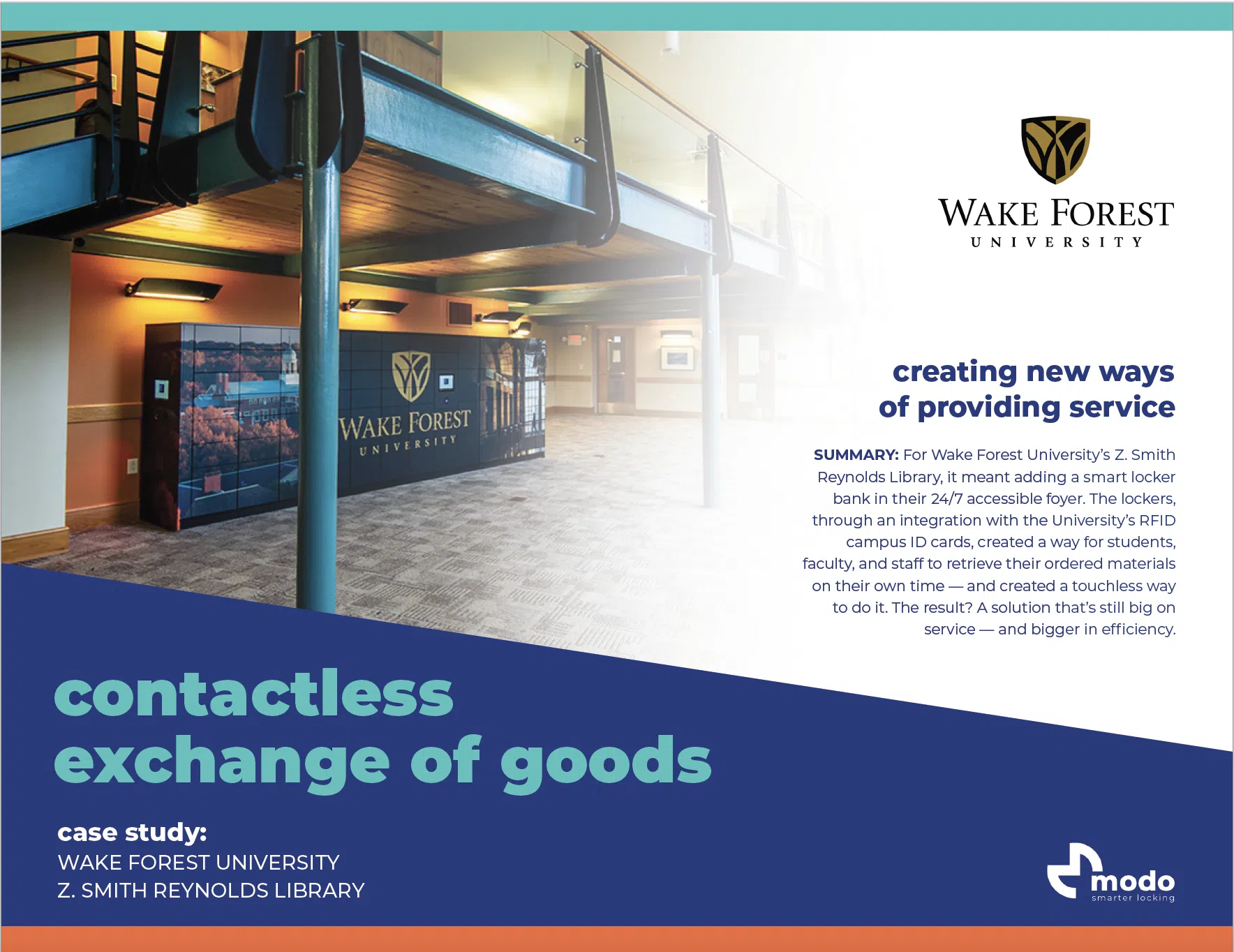
See for yourself how one university used the flexibility of smart locker system to their advantage.
A very telling example of how flexibility and agility are so important, no matter the market, recently happened at a library on a major university campus. The University recently purchased a locker bank for its main campus library. They allocated 75% of the locker openings for delivery lockers — allowing students and faculty to retrieve books and other equipment from the lockers. The remaining 25%, they thought they could allocate for day-use or temporary locker storage for students and visitors at the library.
About a week after installation, by looking at the data, they were able to realize that they were at capacity with the delivery lockers — they were constantly being utilized, while the day-use lockers were not. They contacted us to ask us if we could help them reallocate 100% of their lockers to delivery. Literally, 5 minutes later — all of their lockers were set up as delivery lockers. Two weeks later they called and asked us if they could order more lockers. Further, by leveraging the data available in the software for usage they were able to make data-driven decisions as to what sizes of lockers they should add.
lockers aren't important until they are. don't let your lockers become an afterthought.
you need smart lockers that can keep up with your accommodations.
This flexibility is paramount in today’s world. As students return to campus, the school can easily allocate lockers back to day use and lessen the number needed for delivery or exchange of goods. It seems unfathomable that companies / schools would potentially be limited on their return to work / campus strategies by lockers that can’t accommodate change or are inflexible.
Too many times, lockers are an afterthought or a nuisance in a major renovation or new construction project. Too many times the lockers just fit into a budget that was developed without thought or understanding of what is available. Lockers aren’t important until they are.
There are so many trends coming in this post-covid era — smart building technologies and apps, smart workspaces, contactless credentials on a university campus, and other touchless technologies (ie contactless biometrics, contactless payments, etc.) to name a few. Lockers and smart locking systems should be a platform that will allow you to leverage these new technologies and trends. Invest in a platform that grows, adapts, and changes with you and the needs of your company and/or school.
In a recent article, NFL Commissioner Roger Goodell spoke with reporters Tuesday (11/17/2020) and his message quickly became clear: Updating, enhancing, and strictly following the league’s COVID-19 protocols are of utmost importance. The consistent theme for Goodell included “flexibility and adapting,” with the commissioner stressing the former when saying “flexibility is going to be critical.”
We couldn’t agree more…